
A look beyond the sessions at CAUCE 2026
SESSION: The Real Price of Programs: A Framework That Reveals What CE Leaders Miss
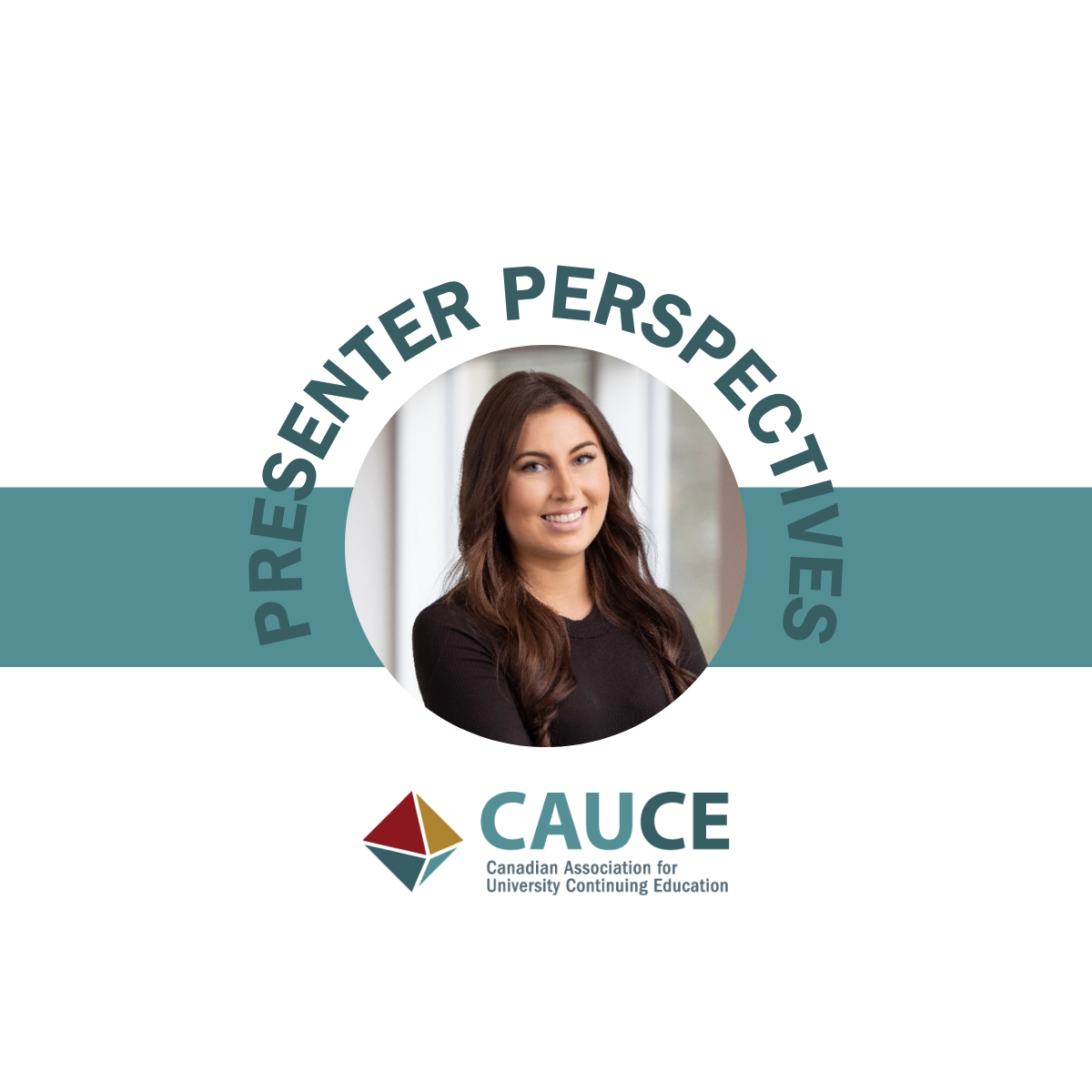
PRESENTER: Morgan Bender, Administrative Officer, Western University
What inspired you to submit this presentation, and why was this topic important for you to share with the CAUCE community?
The inspiration for this presentation came from a simple question that many continuing education leaders have likely been asked: What does it cost to run a program/course? While the question seems straightforward, I found that the answer is often much more complex than anticipated revenue minus instructor costs.
As continuing education units increasingly operate in cost-recovery or revenue-generating environments, understanding the true cost of delivering programming has become essential. Beyond instructional expenses, there are operational, administrative, marketing, technology, facilities, and support costs that all contribute to the sustainability of a program. Having visibility into those costs allows leaders to make informed decisions about pricing, program development, resource allocation, and long-term planning.
What I wanted to share with the CAUCE community wasn’t a finished product, but it was a starting point. We often see polished dashboards and sophisticated financial models without seeing the months or years of work that went into building them. My goal was to help others, regardless of where they were in their journey, begin asking the right questions and collecting the information needed to make evidence-informed decisions. Once that foundation is in place, every institution can develop a model that reflects its own priorities, mission, and operating environment.
What makes this topic particularly relevant to your institution, and why did you want to share those insights with others?
At Western Continuing Studies, we recognized that making strategic program decisions required a more complete understanding of our business operations. Developing an all-in costing model gave us a clearer picture of the financial performance of our programs while allowing us to evaluate them alongside labour market demand and learner needs.
One of the most interesting findings was that programs demonstrating strong operational performance often aligned with areas of labour market demand, reinforcing that there can be a strong relationship between organizational sustainability and community impact. At the same time, the model also highlighted programs that we intentionally chose to support despite lower financial returns because they advanced broader institutional priorities, strengthened pathways for learners, or met important community needs.
Having this information shifted conversations from assumptions to evidence. Rather than asking whether a program was profitable, we could have more meaningful discussions about why we were offering it and whether it was achieving the outcomes that mattered most. I wanted to share this approach because I believe many continuing education units are navigating similar challenges, and there is value in learning from one another rather than each institution building these tools independently.
How would you describe your experience presenting at the CAUCE Conference, and what stood out most to you about engaging with attendees?
Presenting at CAUCE 2026 was an incredibly rewarding experience. I had the opportunity to co-present with my colleague, Chris Smith, Program Manager, Professional Development & Corporate Learning, and our different perspectives created a balanced session that combined practical tools with meaningful discussion and audience engagement.
What stood out most was the level of collaboration that continued well beyond the presentation itself. The conversations during and after the session demonstrated that many continuing education professionals are asking similar questions and working through similar challenges, even though our institutions may differ in size, structure, or mandate.
Continuing education units often operate in unique environments within post-secondary institutions, and finding peers who understand those complexities can be invaluable. One of the things I appreciate most about the CAUCE community is its willingness to openly share ideas, resources, and experiences. I was grateful for the opportunity to share some of the tools and lessons we developed at Western, and equally grateful for the conversations that challenged our thinking and sparked new ideas. I’m excited to see how others adapt these concepts within their own institutions and to continue those conversations at future CAUCE conferences.