
A look beyond the sessions at CAUCE 2026
SESSION: Embracing Complexity: How Indigenous-Led Continuing Education is Building Skills to Support Meaningful Community-based Partnerships
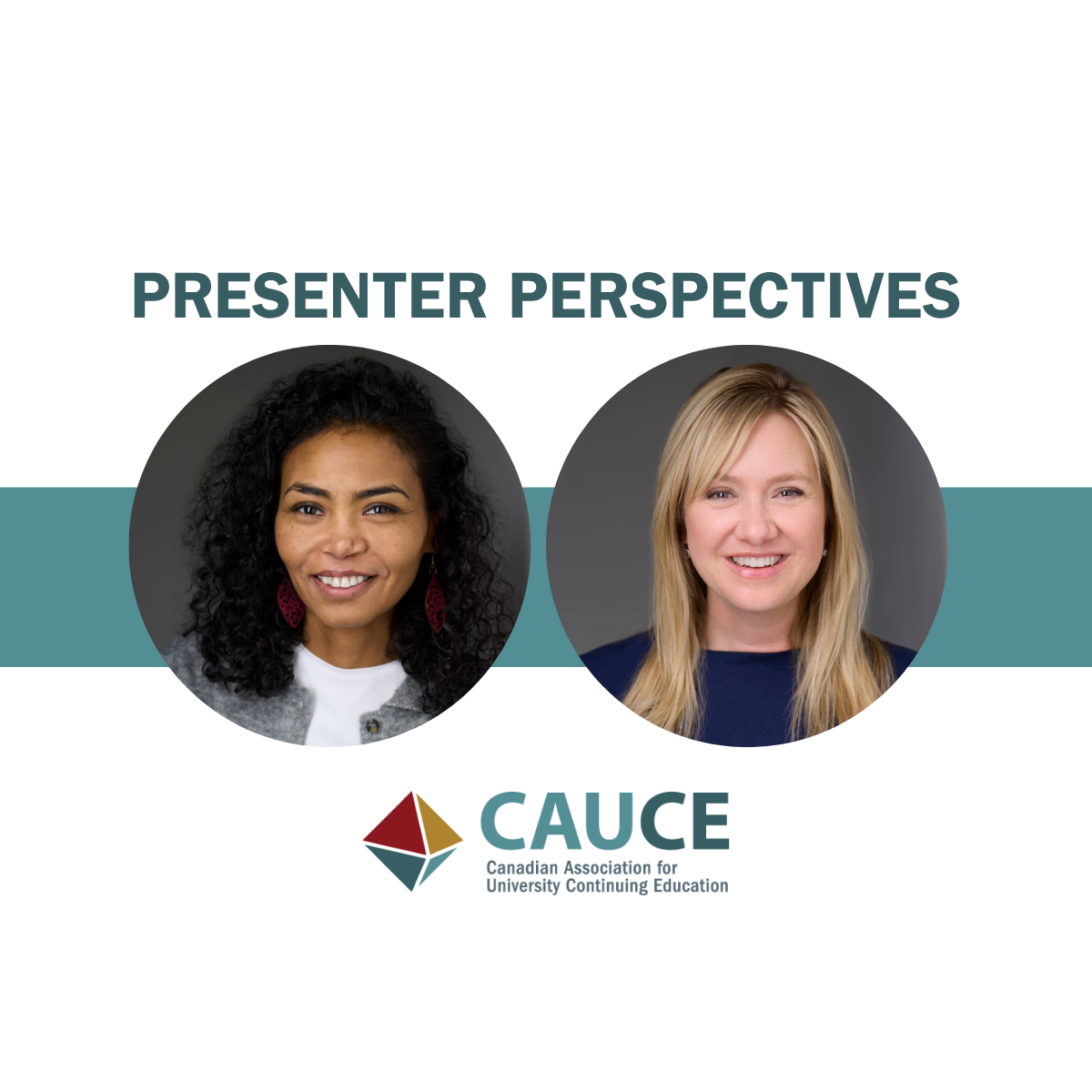
PRESENTERS: Etanda Arden, General Administrator, and Avery Letendre, Online Learning & Strategy Lead, University of Alberta, Faculty of Native Studies.
What inspired you to submit this presentation, and why was this topic important for you to share with the CAUCE community?
In 2015, the Truth and Reconciliation Commission of Canada issued its final reports and 94 Calls to Action. When we considered applying to present at the 2026 CAUCE conference in Halifax, we were mindful that a decade had passed since this historic moment in time. Reaching such a significant milestone encouraged deep reflection and consideration about three main questions:
– What progress has Canada made in addressing these Calls to Action?
– How has the Faculty of Native Studies (University of Alberta) contributed to building foundational knowledge?
– How can we foster change to address complex challenges, and move forward in good relations (as educators, innovators and leaders)?
We determined that, collectively as university continuing education professionals, we are well-positioned to facilitate change in our institutions and provide leadership for the next decade.
We decided to apply so that the Faculty of Native Studies could connect with colleagues from coast to coast, share about our work, encourage dialogue, and foster renewed commitments for the decade to come. As such, our presentation aimed to inspire decolonizing education, advance the fulfillment of more Calls to Action, and enable meaningful collaborations with Indigenous communities—in academic spaces and beyond.
What makes this topic particularly relevant to your institution, and why did you want to share those insights with others?
In the words of Dr. Crystal Gail Fraser, “Truth is action. Truth requires responsibility. Truth requires commitment.” As part of the University of Alberta’s commitment to living in good relations with Indigenous Peoples, the Faculty of Native Studies developed the Indigenous Engagement and Partnership Development (IEPD) massive open online course—now available through Coursera.
The course directly responds to the Truth and Reconciliation Commission’s Call to Action #92 (Business and Reconciliation) which urges organizations to adopt the United Nations Declaration on the Rights of Indigenous Peoples (UNDRIP) principles, such as practicing meaningful consultation and obtaining free, prior, and informed consent (FPIC). Taught by Indigenous scholars, university researchers, community contributors, and Knowledge holders, IEPD provides concrete tools for ethical, community-based engagement—empowering industry leaders, researchers, public servants, and healthcare practitioners to build respectful, long-term relationships.
Building on the Faculty’s leadership in online continuing education, including widely recognized offerings like Indigenous Canada, we wanted to present at the CAUCE Conference to show how post-secondary institutions can translate institutional reconciliation commitments into actionable, accessible learning.
How would you describe your experience presenting at the CAUCE Conference, and what stood out most to you about engaging with attendees?
Avery Letendre: This was my second time presenting to the CAUCE community, but it was a memorable experience once again. This conference was special because Etanda and I had the opportunity to travel together and that was a real gift. The conference fostered new ideas, conversation and connections that have contributed significantly to our overall program objectives. Taking the Halifax Harbour Tour was a must-do east coast outing!
Etanda Arden: Having rarely presented at this scale, and never having traveled farther east than Ottawa, I was nervous heading to Halifax. But the welcoming community and interactive session formats made presenting feel natural and collaborative.
What stood out most was how deeply attendees engaged with our topic. The overwhelming interest confirmed that our course fills a critical educational gap across Canadian society. Between the welcoming community, Halifax’s rich history, and the fresh ocean air, I left feeling enlightened, accomplished, and deeply fulfilled.
