
A look beyond the sessions at CAUCE 2026
SESSION: The Hidden Accelerator: Continuing Education as a Catalyst for Growth and Sustainability
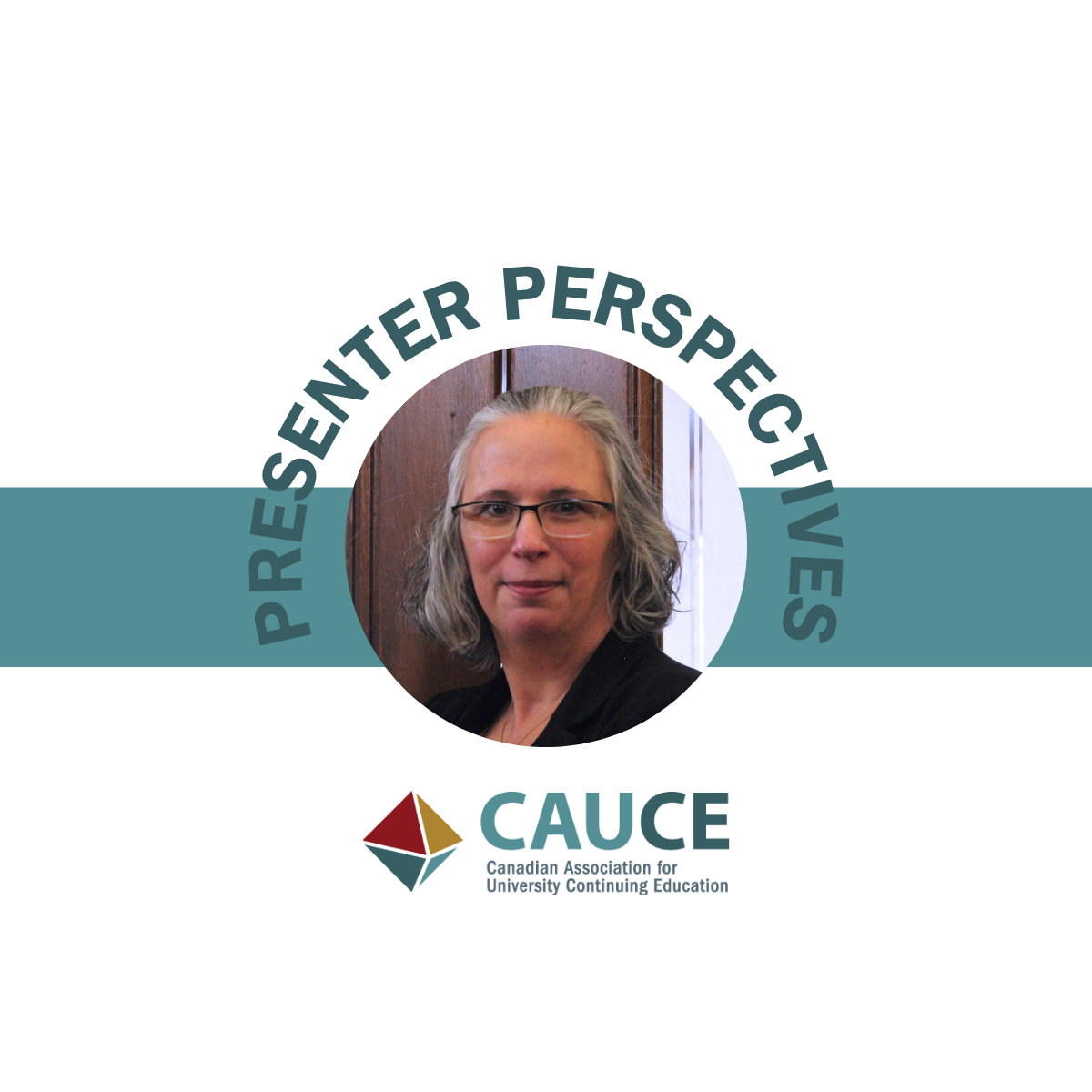
PRESENTER: Michelle Budiwski, Program Coordinator, Assiniboine College Centre for Continuing Studies
What inspired you to submit this presentation, and why was this topic important for you to share with the CAUCE community?
Before beginning my second career in Continuing Education, I spent more than 20 years as an entrepreneur, building several small businesses in response to service gaps within my community. When the pandemic forced those businesses to close, I quickly realized how deeply I missed the creativity and purpose that came from identifying needs and developing practical solutions. That same entrepreneurial spirit drew me to Continuing Education. CE units are, in many ways, the entrepreneurs of post-secondary education: responsive, innovative and uniquely positioned to develop programs that address emerging gaps in workforce skills, professional training and industry capacity. When I pursued my MBA with a specialization in Organizational Learning and Development, I focused my research on the business of Continuing Education and how entrepreneurial thinking could strengthen its role within post-secondary institutions. My work explored how CE could move beyond being viewed primarily as an auxiliary service and become a strategic, mission-aligned contributor to institutional growth, sustainability, and financial resilience. This topic has become even more relevant in the post-pandemic environment. With international student caps, changing labor-market needs and increasing pressure on institutions to diversify revenue, CE units are being asked to contribute more strategically. To succeed, we must invest not only in program development, but also in the internal business capabilities, entrepreneurial skills, and organizational structures that allow CE teams to innovate and grow. That was the inspiration behind The Hidden Accelerator: Continuing Education as a Catalyst for Growth and Sustainability. I wanted to share this work with the CAUCE community because I believe Continuing Education has enormous, and often underrecognized, potential to help shape the future of post-secondary education.
What makes this topic particularly relevant to your institution, and why did you want to share those insights with others?
This topic is particularly relevant to my institution because Continuing Education operates at the intersection of education, industry and community need. Through my work developing and delivering workforce-focused programming, I have seen how CE can respond quickly to emerging skills gaps, build meaningful partnerships and create accessible learning opportunities that traditional programming may not be structured to address as rapidly. Like many post-secondary institutions, we are navigating changing enrolment patterns, funding pressures, evolving workforce demands, and a growing need to diversify revenue. These conditions make it increasingly important to recognize Continuing Education not simply as a service unit, but as a strategic partner in institutional growth, innovation, and sustainability. I wanted to share these insights because the challenges and opportunities are not unique to one institution. Across the sector, CE professionals are doing highly entrepreneurial work—identifying needs, developing programs, managing partnerships and budgets, and bringing new educational solutions to market. By sharing our experiences and approaches through CAUCE, we can learn from one another, strengthen our collective capacity, and make a stronger case for CE’s role in shaping the future of post-secondary education. These reflections are based on my own professional experience and MBA research and do not necessarily represent the official position of my institution.
How would you describe your experience presenting at the CAUCE Conference, and what stood out most to you about engaging with attendees?
Presenting at the CAUCE Conference was both professionally rewarding and personally affirming. It gave me the opportunity to bring together my entrepreneurial background, my experience in Continuing Education and my MBA research in a conversation with colleagues who understand the opportunities and challenges facing our sector. What stood out most was the level of engagement from attendees. The questions, discussions and shared experiences demonstrated that many CE units are navigating similar pressures—from revenue diversification and workforce responsiveness to institutional recognition and internal capacity-building. Attendees were not only interested in the ideas presented; they were eager to explore how those ideas could be adapted and applied within their own institutions. That exchange reinforced one of the greatest strengths of the CAUCE community: its willingness to share knowledge, challenge conventional thinking and learn collaboratively. I left the conference with new perspectives, valuable connections and an even stronger belief that Continuing Education can, and should, play a central role in the future growth and sustainability of post-secondary education.